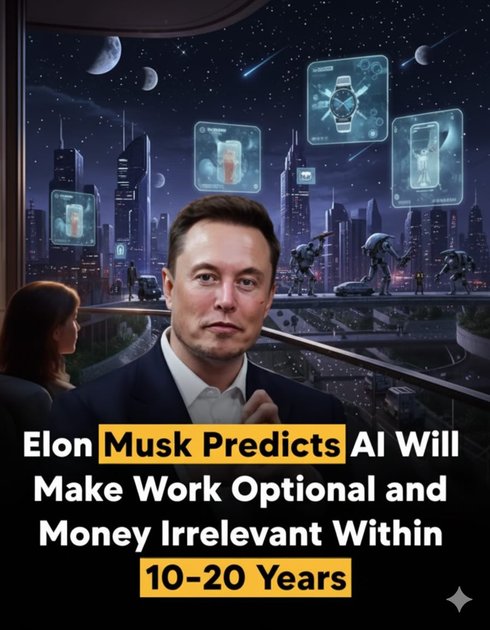
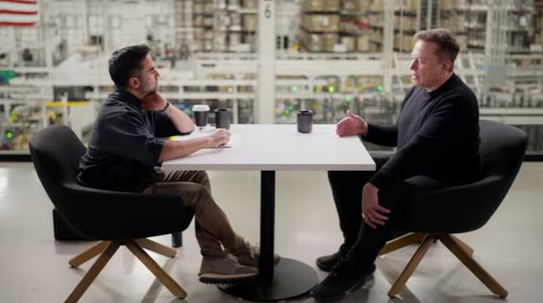
In a very recent episode of WTF's People podcast, billionaire entrepreneur Elon Musk dropped a huge statement: in 10 to 20 years, conventional work will no longer be mandatory. Musk discussed with host Nikhil Kamath that a breakthrough in artificial intelligence and robotics could very well define its new world order that "working would become a hobby," meaning it is a choice.
Elon Musk: A Different Conversation w/ Nikhil Kamath | Full Episode | People by WTF Ep. 16
From Hustle to Hobby: The End of Work as We Know It
Musk envisions that in the not-so-far future, machines and AI are going to handle every kind of labor from manufacturing to services, which would reshape the world for human workers. "Maybe even 10 or 15 years from now, working will be optional," he said. It was a future he posited wherein people would not need to work to exist but would work if they liked it, like growing their own garden instead of buying vegetables.
Reimagining a World Transformed by AI: Abundance, Purpose, and New Economics
Musk believes that in this scenario of AI and robotics reaching a point where all goods and services could be produced on a massive scale, there will be an infinite supply. In other words, traditional scarcity and jobs and money might even lose relevance if it becomes so easy to manufacture whatever it is people desire. He suggests a world where value is no longer mistaken for labor or profit but proportioned to energy and creativity so that people are free to focus on purpose, innovation, or relationships towards self-fulfillment.
Ambitious Promise with Radical Consequences
the social contracts of societies whose basic needs are met by machines?' 'What will happen to education, meaning-making, identity, and human purpose when work becomes optional?' Even Musk grants that some will find what he's forecasting today "a completely absurd prediction."This is more than justanother technological turn; it is a deep cultural and economic churn. This seriously challenges some very basic assumptions underlying the notion that work defines identity, income defines security, and productivity defines value.
Why This Conversation Matters, Especially for Developing Countries?
This presents a unique opportunity for the rapidly growing economies of South Asia, including that of Nepal. In this world of AI-driven abundance, barriers of geography, education, and traditional employment may fall. There is a chance for people to democratize access to goods, services, and connectivity through leapfrogging. This, at the same time, would call for a rethink in education, social safety nets, and value systems—particularly those of the younger generations entering workforce transitions shaped by technology.
However one might view Musk's predictions, as either a hopeful utopia or a technocratic fantasy, they provoke in us a discomforting, yet necessary question: What is work for? What value? And who are we, if labor becomes optional? This podcast is not really about tech; it's about redefining what the future of humanity looks like while standing on the precipice of AI-aided transformation.
Ultimately, Musk’s conversation with Kamath is less about technology and more about humanity: how we redefine meaning, purpose, and progress as AI reshapes every aspect of life.